What is Change Control Management Software?
Change Control Management Software helps pharmaceutical manufacturers manage planned changes to products, processes, equipment, facilities, utilities, computerized systems, documents, and other GMP-controlled elements through a structured electronic workflow.
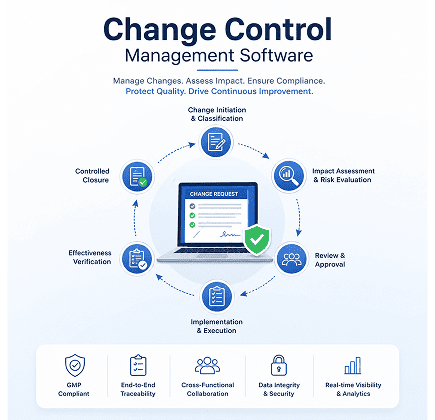
Veritas GxP Change Control Management Software supports the complete change lifecycle, from change initiation and classification through impact assessment, quality risk assessment, cross-functional review, electronic approval, implementation, effectiveness verification, and controlled closure.
The system helps Quality Assurance, Manufacturing, Engineering, Validation, Regulatory Affairs, and other affected teams manage change activities within a connected workflow while maintaining traceability between the change record and related quality processes.
Where a change affects controlled documentation, training requirements, validation activities, deviations, CAPA, or other quality records, the related activities can be connected to the Change Control record to provide better visibility throughout the change lifecycle.
Control Every GMP Change with Confidence
Intelligent Change Control for GMP-Regulated Manufacturing
Change Request Management
— Initiate and manage controlled changes using configurable electronic request forms.
Change Classification
Classify proposed pharmaceutical changes based on type, scope, risk, affected GMP area, and potential quality or regulatory impact..
Impact Assessment
Assess potential effects on product quality, manufacturing processes, validation status, equipment, utilities, documentation, training, and regulatory commitments before implementation.
Quality Risk Assessment
Evaluate change-related risks using structured methodologies aligned with ICH Q9 principles.
Workflow Automation
Automate routing, approvals, notifications, escalations, and review cycles.
Cross-Functional Review
Enable Quality Assurance, Engineering, Production, Validation, Regulatory Affairs, and IT teams to collaborate on change evaluations.
Implementation Planning
Define controlled implementation activities, responsibilities, dependencies, timelines, and supporting evidence required to execute the approved change.
Effectiveness Verification
Evaluate whether the implemented change achieved its intended objective and assess whether additional risks, actions, or controls need to be addressed.
Electronic Review & Approval
Approve change requests electronically using secure electronic signatures and role-based workflows.
Integrated Quality Processes
Connect change control with CAPA, deviations, investigations, document management, training, and risk management.
Dashboards & Analytics
Monitor open changes, implementation status, overdue activities, approval timelines, and quality metrics.
Complete Audit Trail
Capture change-related record activities, modifications, reviews, approvals, implementation events, and lifecycle history to support traceability and record review.
Change Control Workflow
Initiate Change Request
Document the proposed pharmaceutical change, including the reason, scope, affected process, system, equipment, document, or other GMP-controlled element.
Classify Change
Document the proposed pharmaceutical change, including the reason, scope, affected process, system, equipment, document, or other GMP-controlled element.
Perform Impact Assessment
Evaluate the potential impact on product quality, manufacturing processes, validation, documentation, equipment, training, regulatory requirements, and related systems.
Conduct Risk Assessment
Assess quality and operational risks associated with the proposed change and define appropriate controls before implementation.
Cross-Functional Review
Route the change to relevant stakeholders such as QA, Production, Engineering, Validation, Regulatory Affairs, and other affected functions for review.
Electronic Approval
Collect documented approvals through configured workflows and electronic signatures before the change moves to implementation.
Implement Change
Assign and track the required implementation activities, responsibilities, milestones, and supporting evidence.
Verify Effectiveness
Evaluate whether the implemented change achieved its intended outcome and whether additional actions or controls are required.
Update Related Documents & Training
Connect affected SOPs, controlled documents, training requirements, validation activities, and related records with the approved change.
Close Change Control
Close the change record after required activities, reviews, documentation, and configured verification requirements have been completed.
Deliver Controlled Changes Without Compromising Compliance
Standardize Change Management
Ensure every change follows a controlled, documented, and approved process.
Accelerate Change Approvals
Reduce approval delays through configurable workflows, automated routing, notifications, and escalation management.
Reduce Compliance Risks
Maintain complete documentation and traceability for every GMP-controlled change.
Improve Product Quality
Evaluate potential quality and operational impacts before implementation to help identify risks and define appropriate controls.
Enhance Cross-Functional Collaboration
Connect Quality, Production, Engineering, Validation, IT, and Regulatory teams.
Increase Operational Visibility
Track change requests, implementation progress, overdue tasks, and KPIs from centralized dashboards.
Improve Data Integrity
Protect change records using electronic signatures, audit trails, and role-based security.
Simplify Regulatory Inspections
Maintain connected change records and lifecycle history to help teams retrieve supporting information during internal, customer, and regulatory inspections.
Reduce Manual Documentation
Digitize change requests, assessments, reviews, approvals, implementation activities, and related documentation to reduce reliance on disconnected manual records.
Support Continuous Improvement
Implement controlled improvements across manufacturing operations while maintaining regulatory compliance.
Deploy Faster Than Legacy Systems
Support a structured digital implementation approach that helps pharmaceutical organizations replace manual change records with connected electronic workflows.
Built to Support Pharmaceutical Compliance
Good Manufacturing Practice (GMP)
Maintain controlled and documented change management processes aligned with GMP requirements.
21 CFR Part 11
Support secure electronic records, electronic signatures, and audit trails for US FDA-regulated environments.
India CDSCO Alignment
Support change control documentation and validation practices consistent with CDSCO expectations for Indian pharmaceutical manufacturers.
ALCOA+ Data Integrity
Support data integrity practices by maintaining attributable, traceable, and controlled electronic records in alignment with ALCOA+ data integrity principles.
Electronic Signatures
Approve change requests, reviews, implementation, and closure electronically.
Audit Trail
Automatically capture every workflow activity, approval, modification, and implementation event.
Role-Based Access Control (RBAC)
Restrict access based on configured user roles and permissions while supporting controlled responsibilities and segregation of duties.
Inspection Readiness
Generate complete change histories for internal audits, customer audits, and regulatory inspections — in both FDA and CDSCO contexts.
Why Choose Veritas GxP for Pharmaceutical Change Control?
Pharmaceutical changes can affect product quality, manufacturing processes, equipment, utilities, computerized systems, documentation, validation status, and regulatory commitments. Veritas GxP provides a structured environment for initiating, assessing, reviewing, approving, implementing, and closing changes according to configured quality workflows.
Change Control does not operate in isolation. A proposed change may be connected with deviations, CAPA, investigations, quality risk assessments, controlled documents, training requirements, validation activities, and other related quality processes. By maintaining these relationships within a connected system, teams can better understand the impact of a change and maintain traceability across the complete change lifecycle.
Veritas GxP allows organizations to configure workflows, review stages, approval responsibilities, notifications, escalations, and implementation activities around their established SOPs and quality procedures. Quality Assurance, Manufacturing, Engineering, Validation, Regulatory Affairs, and other affected teams can participate in the change process with defined responsibilities and controlled workflow progression.
The system also supports electronic records, electronic signatures, audit trails, role-based access controls, and data integrity practices for GMP-regulated pharmaceutical operations. A complete history of the change request, assessments, reviews, approvals, implementation activities, related quality records, and closure information can be maintained to support internal reviews, audits, and inspection readiness as part of the broader Quality Management System (QMS).

Ready to Improve Change Control?
Change Control Management Software helps pharmaceutical manufacturers electronically manage, review, approve, implement, and document GMP-controlled changes.
The software supports a structured process for evaluating, risk-assessing, reviewing, approving, implementing, and documenting changes according to the organization's configured quality procedures.
The software manages changes related to equipment, manufacturing processes, SOPs, facilities, utilities, software, analytical methods, raw materials, packaging, validation, and quality systems.
Yes. Change Control integrates with Deviations, CAPA, Investigations, Risk Management, Document Management, and Training to provide complete quality traceability.
The system evaluates product quality, regulatory compliance, validation, manufacturing, documentation, and operational impacts before approving changes.
Yes. Every change request, approval, implementation, and closure is protected through secure electronic signatures and complete audit trails.
Quality Assurance, Manufacturing, Engineering, Validation, Regulatory Affairs, Production, IT, Maintenance, and Quality Control teams use the software.
Veritas GxP supports GMP, 21 CFR Part 11, EU GMP Annex 11, India CDSCO, ALCOA+, electronic signatures, audit trails, ICH Q9 quality risk management, and pharmaceutical data integrity requirements.
Change Control manages planned modifications to GMP-controlled processes, systems, equipment, documents, or other controlled elements before implementation. Deviation Management is used to document and investigate an unplanned departure from an approved process, procedure, specification, or expected condition.
Change Control may be initiated when a planned modification could affect a product, manufacturing process, equipment, utility, facility, raw material, analytical method, computerized system, document, validation status, or other GMP-controlled activity.
When a corrective or preventive action requires a controlled modification to a process, procedure, equipment, system, or document, the related CAPA can be connected with Change Control to maintain traceability between the identified issue and the approved implementation activity.
After implementation, the organization can complete required documentation, training, validation, verification, and effectiveness activities according to the configured workflow before the Change Control record is reviewed for closure.